
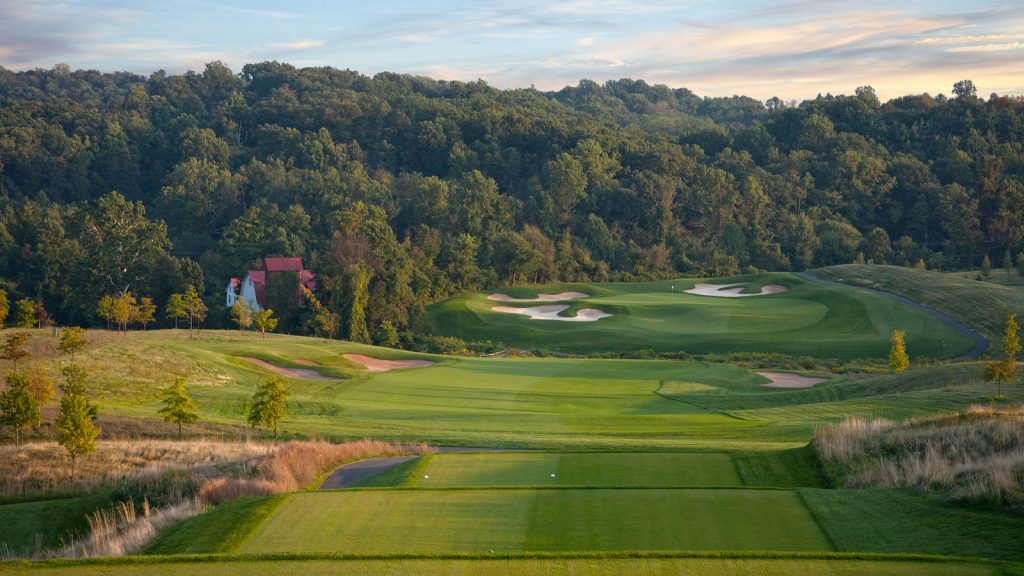
There’s a common misconception that golf course photography is simply beautiful landscape photography with a flagstick in the frame. I’ve learned that photographing a golf course is less about scenery and more about strategy, architecture, and intent. The difference matters, especially for clubs trying to position themselves at a high level. Here’s why.
Angles That Sell Strategy
A landscape photographer looks for beauty — symmetry, light, color, mood.
A golf course photographer looks for strategy.
– Where does the fairway pinch?
– How does the bunker influence the line of play?
The right angle reveals:
– Width that isn’t obvious from the tee
– A false front that repels a marginal approach
– A bunker complex that dictates decision-making
Elevation shifts and hazard placement are everything. If the camera is placed incorrectly, you flatten the story. You turn chess into checkers.
Great golf photography doesn’t just say, “This is pretty.” It says, “This is how it plays.”
Showcasing Architecture vs. Scenery
Sunsets are easy.
Mountains are easy.
Water is easy.
Architecture is not.
Golf course photography celebrates how an architect worked with (or challenged) that nature.
Highlighting Design Intent
Every great course has intent. Sightlines are deliberate. Framing is intentional. Risk and reward are carefully calibrated. If you shoot it from the wrong height, you eliminate the intimidation. If you shoot it from the wrong direction, you remove the strategy. If you over-dramatize it, you distort the architect’s vision.
Design intent must be preserved visually. That means:
– Shooting from golfer eye level when appropriate
– Using drone height strategically — not for spectacle
– Avoiding angles that exaggerate or minimize features inaccurately
Architecture deserves honesty.
Respecting Architecture Visually
Golf architecture is intellectual. It’s strategic and emotional. When we photograph it, we are documenting part of a club’s history. These images may live in marketing decks, championship announcements, clubhouse walls, and member collections for decades.
That responsibility requires restraint.
It requires understanding the architect’s philosophy.
It requires studying routing before stepping on property.
It requires patience for the right light that enhances contours instead of hiding them.
If your imagery only shows scenery, you’re selling a park. If your imagery shows architecture, you’re selling a golf experience.
And those are two very different things.