
One of the most common questions I get is:
“Can’t you just shoot it during the day?”
Technically — yes.
Strategically — absolutely not.
In golf course photography, timing isn’t aesthetic preference. It’s architectural preservation.
As someone who is borderline obsessive about detail, I don’t choose tee times for convenience. I choose them based on sun angle, shadow length, turf health, and how the light interacts with contour.
Here’s why it matters.
1. Light Direction: Revealing or Erasing Strategy
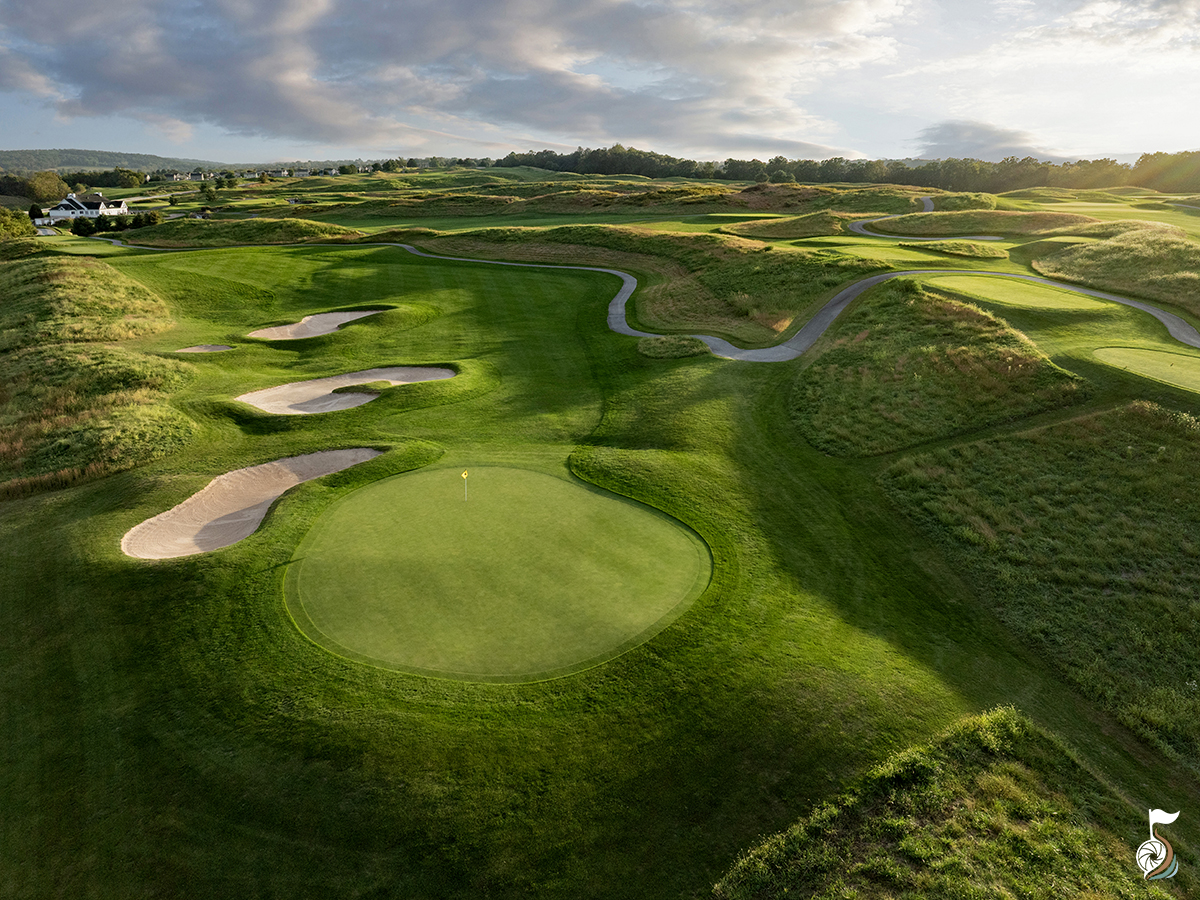
At golden hour — just after sunrise or before sunset — the sun sits low on the horizon. That low-angle light creates shadows that reveal:
Subtle green contours
Fairway movement
Bunker depth
Surface undulation
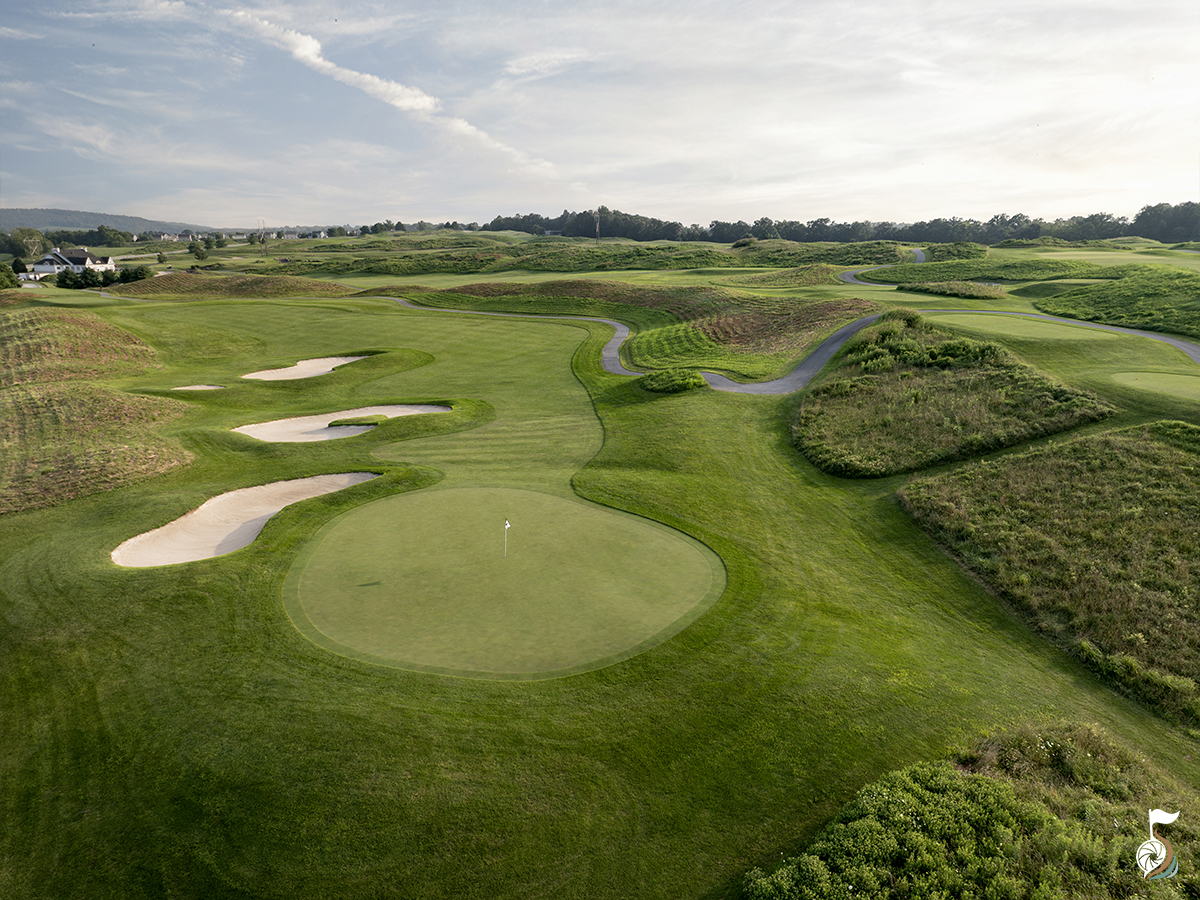
Midday light, by contrast, is overhead and flattening.
When the sun is directly above, shadows disappear. And when shadows disappear, so does dimension. Greens look flat. Bunkers lose depth. Fairways lose movement.
On a course with dramatic shaping like Thracian Cliffs Golf & Beach Resort, low-angle light makes the cliffs and hazards feel three-dimensional. At noon, much of that drama disappears into glare.
Light direction tells the truth about the architecture — or hides it.
2. Texture: The Difference Between Flat and Alive
Golf architecture is built on texture.
Fescue movement.
Mown lines.
Bunker faces.
Collar transitions.
Golden hour light skims across the turf. It rakes across surfaces, creating micro-shadows that emphasize texture. You can feel the firmness of the fairway and the depth of the rough.
Midday light hits from above. Texture compresses. Surfaces look uniform and less dynamic.
On a meticulously conditioned property like Wade Hampton Golf Club, texture is part of the story. If you don’t photograph it correctly, you’re not showing the superintendent’s work — or the architect’s shaping — with respect.
And that matters.
3. Turf Color: Warmth vs. Washout
Color science is real.
Golden hour introduces warmer tones that enhance:
Bentgrass vibrancy
Fescue highlights
Natural contrast between playing surfaces
Midday sun often creates:
Harsh highlights
Overexposed sand
Washed-out greens
Distracting glare on water
Courses along the coast, like BlackSeaRama Golf & Villas, can look electric at sunrise — rich blues, textured greens, glowing stonework.
At noon? The same hole can feel sterile and overlit.
Light temperature changes perception.
And perception influences emotion.
Why I’m Obsessed With Timing
I plan shoot schedules around:
Sun path and hole orientation
Seasonal turf tone
Prevailing wind direction
Dew patterns
Cloud movement
If a par-3 plays east, it may only photograph correctly for a 30-minute window at sunrise. Miss it, and you wait a full day.
That’s not inconvenience.
That’s discipline.
Because golf course photography isn’t about documenting space.
It’s about honoring design.
Low-angle light reveals contour.
Correct timing enhances conditioning.
Intentional scheduling preserves architectural truth.
Anyone can photograph a golf course at noon.
Detail-obsessed photographers wait for the light that tells the full story.